Table of Contents
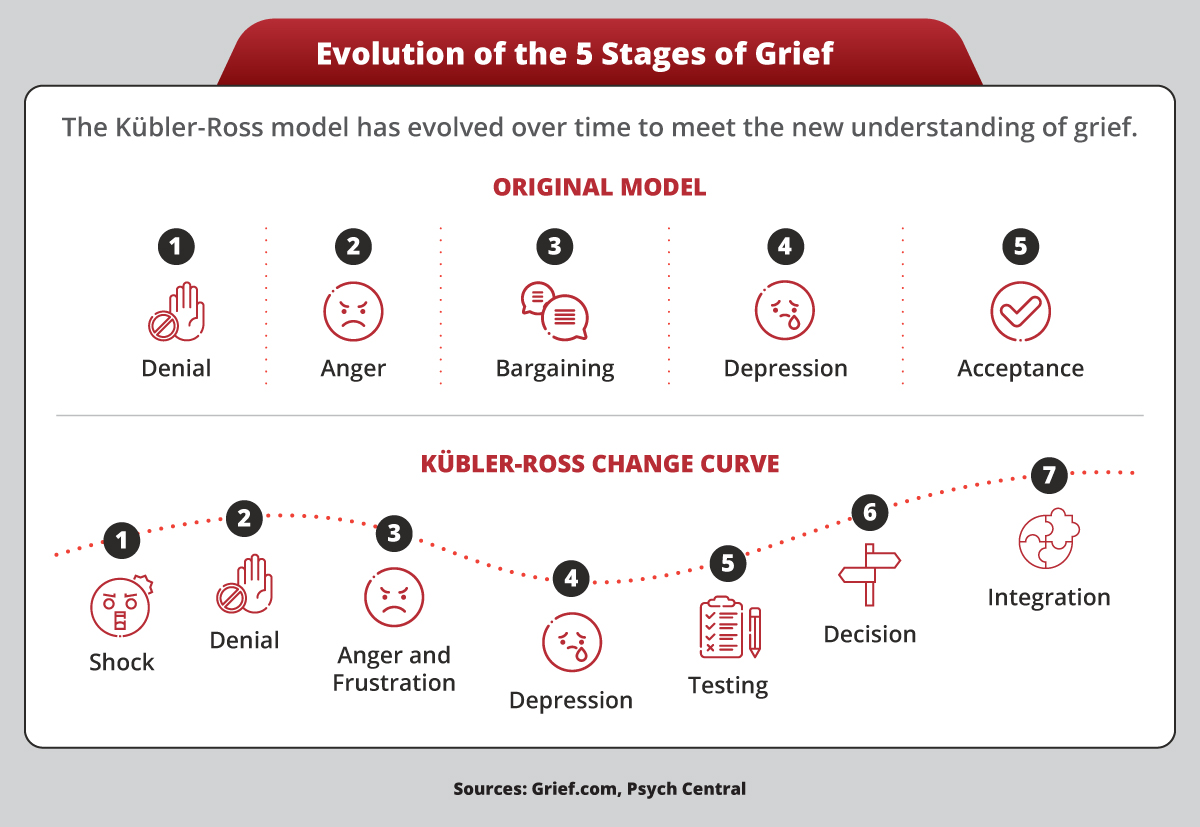
The five phases of pain are rejection, anger, bargaining, clinical depression, and acceptance. Everybody experiences despair in different ways, and it is important to permit people to regret in their very own way.
It is very important to keep in mind that the mourning procedure can be intricate, and it isn't the exact same for everybody. These steps might not be followed precisely, or other sensations may surface after you believed you were with the stages of grieving. Allowing area to experience grief in your own way can aid you heal after loss.

It recommends that we go through five unique stages after the loss of a liked one. These phases are denial, anger, negotiating, clinical depression, and finally acceptance. In the initial stage of the grieving process, rejection helps us lessen the overwhelming discomfort of loss. As we refine the truth of our loss, we are also attempting to endure psychological pain.
Throughout this phase in mourning, our fact has actually shifted totally. It can take our minds time to get used to our new fact. We assess the experiences we have actually shared with the person we shed, and we may find ourselves asking yourself how to move on in life without this individual. This is a great deal of info to check out and a whole lot of agonizing imagery to process.
The Overlooked Weight of Success
Denial is not only an attempt to make believe that the loss does not exist. We are attempting to change to a brand-new reality and are most likely experiencing extreme psychological pain.
Anger likewise tends to be the initial point we feel when starting to launch feelings related to loss. This can leave us really feeling separated in our experience.
Throughout negotiating, we often tend to concentrate on our individual mistakes or regrets. We might look back at our communications with the person we are losing and keep in mind constantly we felt separated or may have triggered them discomfort. It is common to recall times when we might have stated things we did not suggest and want we can return and act differently.
During our experience of processing despair, there comes a time when our creativities relax and we slowly start to consider the reality of our present circumstance. Bargaining no more seems like a choice and we are encountered with what is occurring. In this stage of grieving, we begin to feel the loss of our enjoyed one even more abundantly.
How Medical Workers Need Customized Treatment in Los Angeles
In those moments, we tend to draw inward as the despair grows. We might find ourselves pulling away, being less friendly, and reaching out much less to others concerning what we are undergoing. This is an extremely all-natural phase in the mourning procedure, dealing with clinical depression after the loss of an enjoyed one can be exceptionally separating and among one of the most difficult phases.

, it is not that we no much longer really feel the discomfort of loss. Rather, we are no longer withstanding the reality of our situation, and we are not having a hard time to make it something different.
There is no specific period for any one of these phases. A single person might experience the phases promptly, such as in an issue of weeks, whereas another person may take months or perhaps years to move through the phases of grieving. Whatever time it takes for you to relocate with these stages is flawlessly normal.
Gentle Self-Regard for Successful Professionals
You might or may not go through each of these stages or experience them in order. We might additionally relocate from one phase to another and potentially back again before totally relocating into a new phase.
These designs can offer greater understanding to individuals that are injuring over the loss of a loved one. They can additionally be utilized by those in recovery careers, assisting them to give effective treatment for grieving individuals who are seeking informed advice.
British psychiatrist Colin Murray Parkes developed a version of pain based on Bowlby's concept of attachment, suggesting there are four phases of grieving when experiencing the loss of a liked one:: Loss in this phase feels impossible to accept. A lot of closely pertaining to Kbler-Ross's stage of rejection, we are overwhelmed when trying to cope with our feelings.
: As we process loss in this phase of grief, we might begin to look for convenience to fill up the void our liked one has actually left. We might do this by experiencing memories through pictures and trying to find indicators from the individual to feel linked to them. In this phase, we end up being really busied with the individual we have lost.
Building Authentic Connections After Complex Trauma Work in Your Life
The awareness that our liked one is not returning really feels real, and we can have a hard time recognizing or discovering hope in our future. We may feel a bit aimless throughout this section of the mourning procedure and resort from others as we process our pain.: In this stage, we really feel much more confident that our hearts and minds can be restored.

Navigation
Latest Posts
Your Guide to Finding a Specialist in Work Challenges and Burnout for Couples Work
Understanding Shame in the Context of IFS Therapy
Recovery: Professional Life Beyond Trauma Therapy